
Gears allow a car to be driven with the minimum strain on the engine. Modern cars usually have five forward and one reverse gear, although some cars now have a sixth forward which gives greater fuel economy when driving at higher speeds over longer distances.
To change gear in a car:
Whilst changing gear you must always keep your eyes on the road. The sound of the engine can tell you when you need to change gear. As you accelerate the engine will come to sound whiny and take on a higher pitch. This is because the engine is reaching its limits for the gear you are in. When you hear this you should change up.
Remember:
For a smooth ride you should avoid "snatching" (changing gear with too much force). To make the gear change smoother, let the gearshift pause for a second as it crosses the neutral zone.
You don't have to use the gears in exact sequence. Where appropriate, you can miss a gear. This is called block changing. Say you are driving at 60mph but have to brake and slow the car to 20mph. Here you wouldn't have to change down through the gears but could go from fifth to third, or even to second. Likewise, you can block change up, while accelerating you could change from third into fifth, a method which helps save fuel. Block changes also reduces wear on the clutch as it is used less often.
Lower gears provide greater power and acceleration. Sometimes you will need to change to a lower gear because you need a burst of power and acceleration, for example when overtaking.
When you remove your foot from the accelerator the engine automatically slows the car, this is known as the engine brake. In high gears this effect is hardly noticeable but in low gears the engine brake is much more noticeable and is an effective way of slowing the car.
You should select a lower gear when driving downhill, so the engine brake helps to control your speed
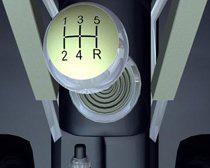
FIRST - The gear giving the greatest power but lowest speed. Used for moving off, manoeuvres and negotiating hazards.
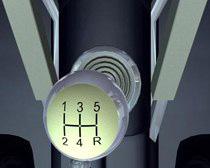
SECOND - Used for slow speed situations such as roundabouts and junctions, for moving off downhill and for increasing speed after moving off.
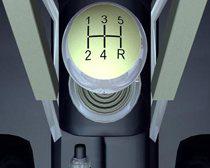
THIRD - Used for driving uphill, through a hazard at speed and where a greater degree of power is needed than fourth will allow.
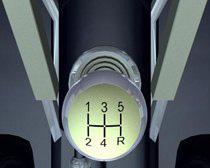
FOURTH - Low power but the greatest speed range. Used for most driving situations at and over 30 mph where there are no hazard to negotiate.
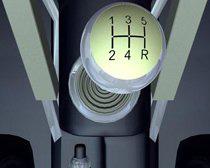
FIFTH - Lowest power, highest speed. Used for high speed cruising on dual carriageways, motorways and other such open roads.
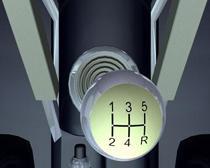
REVERSE - A high powered gear used for driving the vehicle backwards.
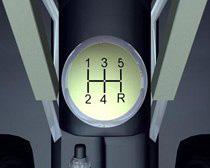
NEUTRAL - Disengages the engine from the wheels.
On your test, when changing gears, the examiner will expect you to:
What the driving test examiner expects of you during the driving test.