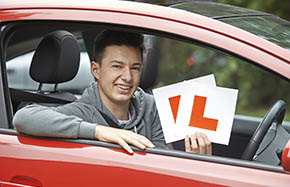
Driving Test Success provides free online driving lessons. We are the driving school that offers practical driving test video lessons, free theory test practice using official DSA theory test questions, a driving schools directory, hazard perception lessons and mock tests using official DSA practice clips, the show me, tell me questions and answers, driving test tips and instruction articles. The tutorials and lessons we offer have been designed to supplement professional driving lessons and help all learner drivers gain the knowledge to pass their driving test in the quickest time possible. |
THE UK DRIVING TESTLearning to drive and taking the driving test exists primarily as a road safety measure. It is designed to ensure all new drivers can drive safely and unaccompanied.Although many learner drivers find selecting a driving school and taking lessons daunting at first, with the correct preparation, and some professional driving tuition, there is no reason why the freedom of a full UK license can't be attainable to all. Yes the driving test is detailed and in-depth, which leads some to conclude its real aim is to fleece those taking the test out of their hard earned cash, or to provide a good profit for the driving schools that provide the lessons. However, the facts are stark! Every year 1,000 people die in road traffic accidents involving a young driver, hence why cheap young drivers car insurance is a rarely realised promise. Research shows that it takes 2 years from passing the practical driving test before a new driver's accident liability falls by less than 50%. Under the New Drivers Act 1997 newly qualified drivers who receive 6 or more penalty points on their licence within 2 years of passing their driving test will have their licence revoked. To get their licence back they'll first have to reapply for their provisional driving license, pay for even more driving lessons and then re-take the theory & practical driving test (dvd). |
|
So be warned. The more driver training and driving lessons you receive (through driving schools, family or friends) the better. Learning to drive isn't easy. Driving is a skill that must be learnt. Yes some people have a greater aptitude for it than others but all learner drivers will benefit from professional driving lessons provided by competent instructors. Get in as much driving practice as possible. Experience as many driving situations as you can. Drive at night, in the country, in town, on dual carriageways and in all weather conditions. Driving variety and depth should be the main objectives of all people learning to drive. This level of preparation will not only increase your chances of passing the practical and theory tests first time but also, in the long run, save you money. Learner drivers car insurance. DRIVING LESSONS - CHOOSING A DRIVING SCHOOLLearning to drive can be a complicated process. There are many driving schools in the UK. From national driving schools who cover most of the UK, to local, one-man-band driving instructors who provide driving lessons in a single area. Selecting the appropriate driving school from the vast array of schools that exist is not an exact science. One rule however always stands out - personal recommendation. Has a friend who is learning to drive had a good experience with a particular driving school? Were they happy with the service and driving lessons provided? If so, at the very least, it's a tick in their favour.The prices charged for driving lessons can differ widely. Location is a key factor with the south of the UK being most expensive. Driving lessons here can cost up to £25 per hour. The average across the country is around £22 for a one hour driving lesson. If the price is cheaper than this make sure you ask whether the instructor giving the driving lesson is fully qualified. They may not be, hence the low price of the lessons. Don't be fooled by very cheap driving lessons. Some driving schools may offer cheap introductory offers such as ten driving lessons for £50. These prices don't always add up. Remember cheap in, expensive out. They pull you in with a cheap deal but then you find yourself advised to have more lessons, at the standard rate, than you actually need. Driving schools all offer discounts if you book in blocks of 10 lessons or more i.e. book a block ten driving lessons and get one lesson free. Some schools will also offer student and NHS discounts. Always ask for a discount and even haggle. With the economy as it is there are probably more driving instructors than there is demand. Additional services offered by most driving schools include - a door to door service, a full hour driving lessons (not 50 minutes teaching and 10 minutes driving you home), no car sharing (no other pupil in the back waiting their turn) and so on. So make sure you know exactly what the driving school is offering you before you book your driving lessons. See our driving schools glossary to understand the terms they use. You should always make sure the driving school you choose has signed the voluntary Code of Practice. This code of practice, drawn up by the DSA and learner driver industry, provides a framework in which all driving schools and instructors should operate. It covers instructors' personal and professional conduct, driving schools advertising and their complaints procedure. A leaflet outlining the code can be obtained from any theory test or driving test centre or call the DSA on 0115 901 2500. Code of Practice details. Should you make sure that your driving instructor is fully qualified? A trainee driving instructor can give driving lessons and some driving schools do employ such instructors. If your instructor displays a green badge in their car it means they are fully qualified. If the badge is pink then the instructor is still training. In order to get a pink badge the trainee driving instructor has to pass parts 1 & 2 (a theory test and an advanced ADI driving test which is of a much higher standard than the standard driving test) of the DSA instructor examination and have done at least 40 hours ADI training. Then they must do a further 20 hours training shortly after the badge is issued. Part 3 of the exam is a practical driving test that assesses the trainee's instructional ability. These are the facts. The choice is yours. |
TAKING THE PRACTICAL DRIVING TESTYou can't take the practical driving test until you've passed the theory and hazard perception tests. The practical test is about making sure that those who pass are competent and safe in the basic skills of driving. Taking the driving test is your own car.Before the driving test begins you will be required to pass an eyesight test. You must be able to read a new style number plate from a distance of 20 metres and an old style number plate from a distance of 20.5 metres. If you fail this test then the practical driving test will go no further. If you pass you will then take the show me, tell me test. During the practical test you will be expected to drive for about 40 minutes in various road driving situations. You will be asked to perform two of the three reversing manoeuvres. You may also be required to perform an emergency stop. What the driving test examiner looks for, IN ORDER TO PASS THE PRACTICAL DRIVING TEST, YOU MUST DRIVE:Without committing any serious or dangerous faults or without committing more than 15 driving errors of a less serious nature.Dangerous Driving Faults - a fault that results in actual danger. Commit such a fault and you will fail the practical test immediately. Serious Driving Faults - is when a potentially dangerous incident occurs, when the candidate reveals a recurring driving fault or fails to perform a manoeuvre correctly. Receive a serious fault and you fail the practical test. Minor Driving Faults - less serious faults, such as hesitating too long at a junction, faults that don't provide any immediate danger. Receive 16 or more minor driving faults and you will fail the practical test. |
TOP TEN REASONS WHY PEOPLE FAIL THE PRACTICAL DRIVING TESTObservation at Junctions: Ineffective observation and judgment. Reverse Parallel Parking: Ineffective observation or lack of accuracy. Use of Mirrors: Not checking or not acting on what is seen. Reversing Around a Corner: Ineffective observation or lack of accuracy. Incorrect Use of Signals: Not cancelling or giving misleading signals. Moving Away Safely: Ineffective observation. Incorrect Positioning: At roundabouts or bends. Lack of Steering Control: Steering too early or too late. Incorrect Positioning: When turning right at junctions and in one-way streets. Inappropriate Speed: Going too slow or being hesitant. |
Free Theory Test Questions? DSA Theory Tests The minimum score needed to pass the theory test? 43 correct answers from 50 theory test questions. The theory test pass rate is 62.9% For Driving theory test tips and advice - Driving Theory Test |
| THE PASS RATE FOR THE PRACTICAL TEST IS 45.65% |
PRACTICAL DRIVING TEST PREPARATIONArrive 10 minutes before the test is due to start. This will give you time to relax and calm your nerves before the driving test begins. Make sure you have your photo card or ID and your theory test pass certificate.If you wear glasses or contact lenses, make sure you take them with you. Failing to produce any of these items will result in failure without a refund. When it is time for your practical driving test to begin, the examiner will check your papers and will ask you to sign a declaration to say the car you are driving is insured. You can ask for your instructor to sit in the back at this stage. PROVISIONAL DRIVING LICENCEYou cannot have driving lessons or drive a car on UK roads until your provisional licence has been accepted and is in your possession. You must be 17 years of age for the licence to be valid (16 years old if you receive the highest rate of mobility allowance). You can apply for the provisional licence up to two months before your 17th birthday.See the DVLA web site for full information on costs and relevant forms. HOW TO BOOK THE PRACTICAL TEST
|
| Links | Contact Me |
This website contains Crown Copyright material which has been reproduced by permission of the Driving Standards Agency which does not accept any responsibility for the accuracy of the reproduction. |
Disclaimer - the owner of this website accepts no responsibility for any injury, loss or inconvenience sustained by anyone using this website. Copyright © 2004-2010 VVP. All rights reserved worldwide- Hosting byMemset Dedicated Servers |